
Software
Why customer & vendor portals pay for themselves
Every 'can you send me my statement?' call is time your team could spend elsewhere. Self-service portals answer those questions automatically.
Think about how many calls, emails and messages your team handles each week asking for an invoice copy, an order status or an account balance. Each one is small. Together they add up to hours — and to customers who wait longer than they'd like.
What a portal actually does
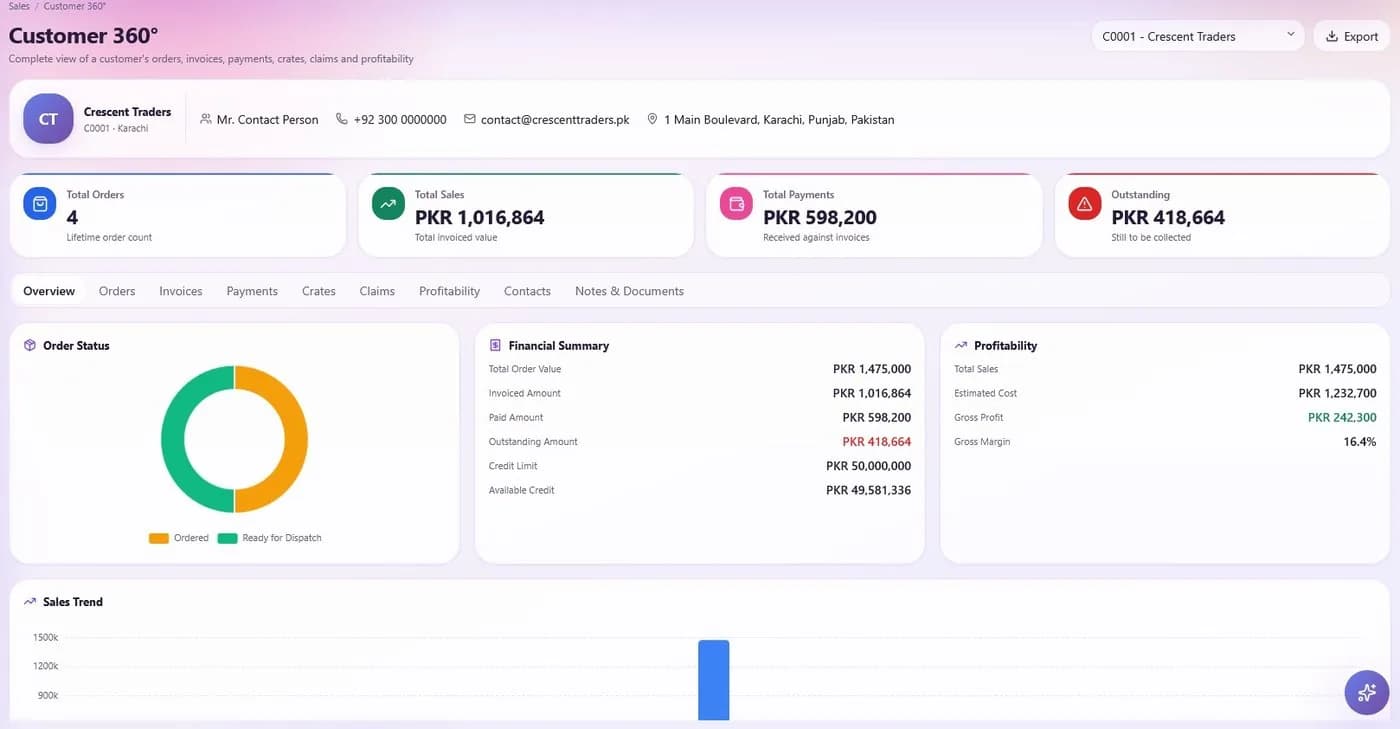
A customer or vendor portal gives partners secure, round-the-clock access to their own information, pulled live from your ERP. Instead of asking, they look it up.
- Statements, invoices and payment history on demand.
- Live order, delivery and service-ticket status.
- Requests and approvals without long email chains.
- Documents and contracts in one secure place.
Where the value comes from
The first benefit is fewer routine enquiries. The second is speed: when customers see what they owe and can act on it, collections tend to move faster. The third is trust — information that's always current reduces disputes.
The best support request is the one nobody needs to make.
Industries where portals work especially well
- Real estate — members check installments, dues and booking details.
- Distribution — dealers place orders and track deliveries.
- Manufacturing and textile — suppliers confirm POs and share updates.
- Services — clients follow project progress and approvals.
Getting it right
Start with the three questions your team is asked most often and make those answers self-service. Keep the portal connected to your ERP through secure APIs so the data is never out of date, and design it in your brand so partners feel at home.
NexBridge designs and builds secure customer, member and vendor portals integrated with SAP Business One and other business systems.